Wednesday, January 29, 2014

Bunker Rehab

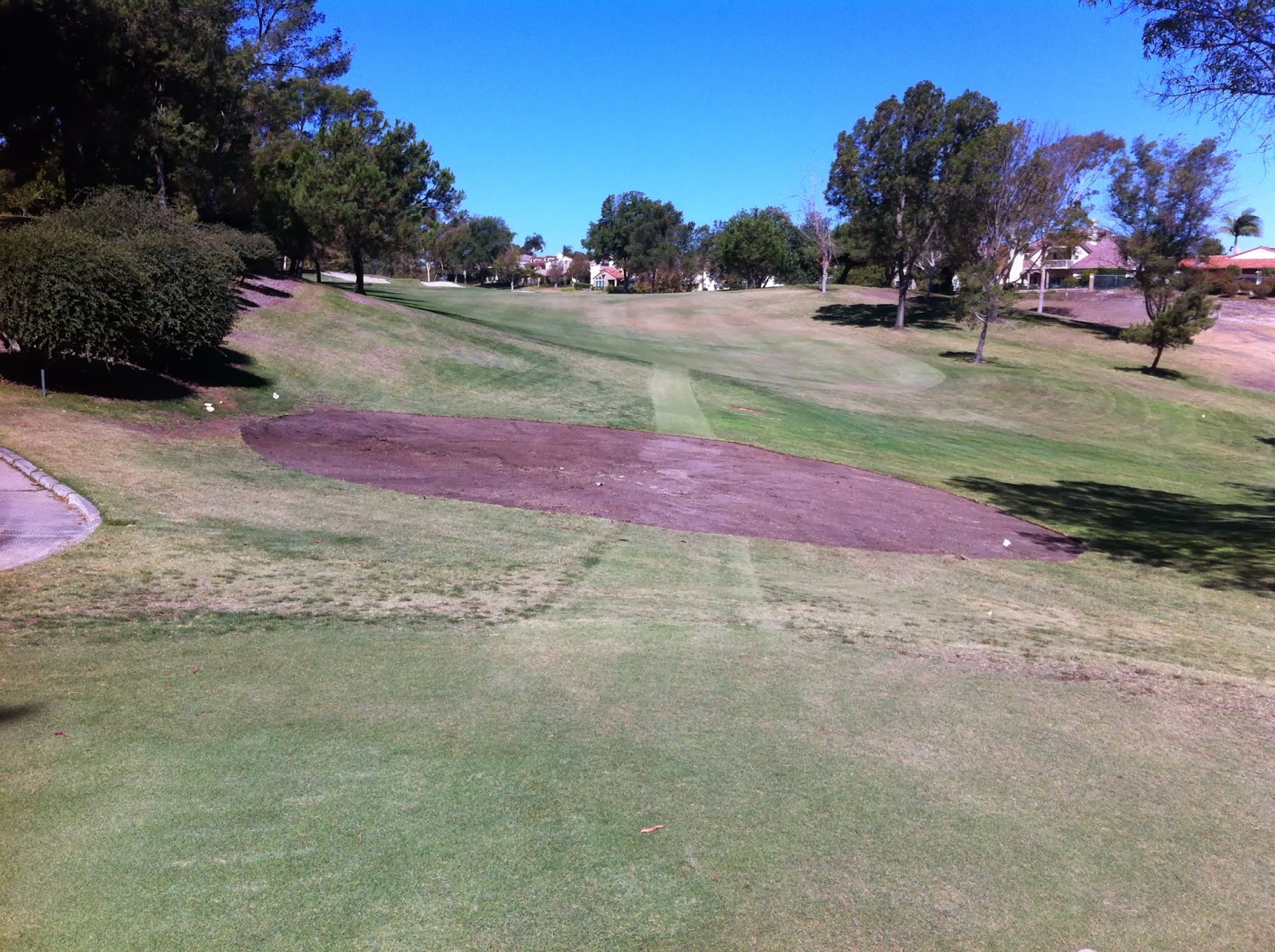
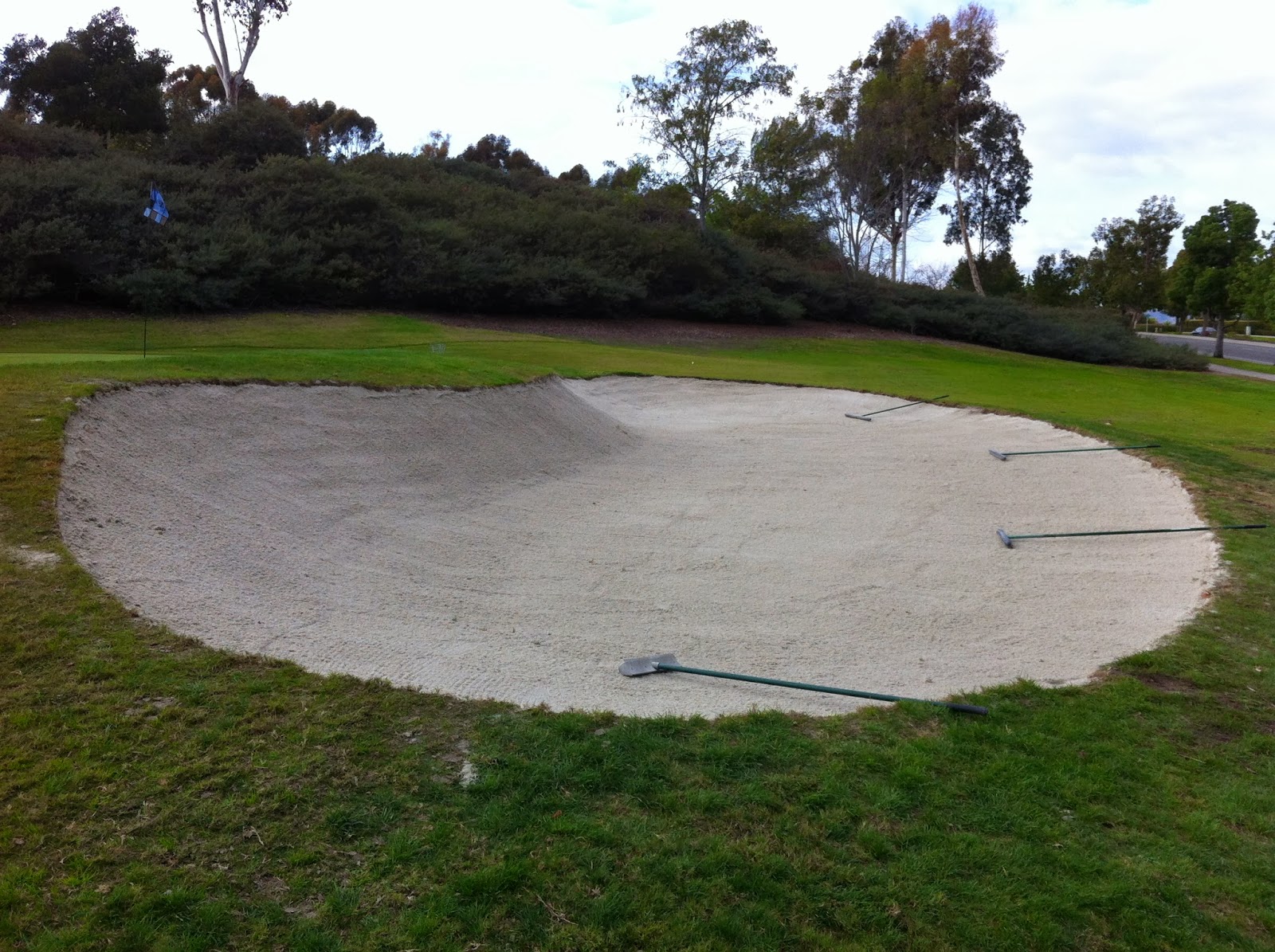
The bunker master plan is off to a great start with the recent renovations to holes 5, 6, and 7.  Those changes not only improved playability, but also improved upon an already solid design.  The redesigned green complexes are now more attractive and promote some creative golf shots.

Sand screening back at the shop
We can't renovate all the bunkers at once, so our other bunkers will need some in-house rehabilitation.    The main complaint is a lack of sand.  Sometimes this is the case and a club will find the underlying clay bottom, or hard pan as golfers like to call it.  However, many areas have plenty of sand, but it is aged, broken down, and contaminated with clay.  Do you know what clay plus sand equals?  Well, that's the simple recipe for concrete and that's how some of our bunkers feel.  Adding brand new sand is a foolish waste of money and no argument will ever convince me otherwise.  New sand is quickly mixed with old sand and thousands of dollars result in very little improvement.  The USGA recommends that all sand is REPLACED every five years.  I think we can get by with a few more years, but adding sand year after year is not a sustainable practice.

Compaction work on #3 green-side bunker
The maintenance department is surveying the course to find the worst of the green-side bunkers.  We are looking for areas with very little sand, inconsistent amounts of sand from one location to another, and other problems like roots or very poor drainage.  Since we never get any rain (sad, but true) the drainage is not the greatest concern.

The sand we are using to touch up the bunkers has been removed from the renovated bunkers on 5, 6, and 7.  We have delivered this sand to the maintenance yard and built a screen to remove any gravel, clay chunks, roots, or other debris.  The screened material is very consistent with the existing sand in our bunkers and is blending nicely.  We have already touched up over 20 bunkers throughout the course.

Roots remove from #17 bunker near path
When it comes to bunkers, there is a fine line between too soft and too firm.  If sand that has not been properly compacted, the result is fried egg lies.  If you recently saw me driving around in a bunker or two, that is the reason why.  Our staff, which has pretty much taken control of this project, returns to the shop in the late morning with a report of which bunkers need some work.  The next morning, I inspect the bunkers with a few golf balls thrown at a reasonable angle, a wedge to test playability, and my cart to get the right compaction.  I think the bunkers we have worked on are now playing much better.  The sand is firm, but there is sand and it is pretty consistent.

If you encounter a thin area, find a root, or plug a ball, please let the Proshop or maintenance worker know of the problem.  We are eager to make these hazards as friendly as possible.  However, remember that word: hazard. It's supposed to be difficult and you're supposed to stay out of there.  Good luck!!

Sunday, January 19, 2014

Winter's Woes

The blog has been quiet, thought about taking the winter off, but I'm not so sure this is winter any more.  I was optimistic that rain would come in January.  The Farmer's Almanac is usually right, somehow, but here is the January forecast for Northern California:

JANUARY 2014: temperature 53° (1° below avg.); precipitation 8" (5" above avg.); Jan 1-3: Clouds and occasional drizzle, cool; Jan 4-10: Heavy rain, then sunny, chilly; Jan 11-14: Heavy rain, mild; Jan 15-16: Showers;Jan 17-19: Heavy rain, mildJan 20-24: Rainy periods, cold;Jan 25-27: Sunny, cool; Jan 28-31: Rainy, cool.
Unfortunately, not a drop of rain has fallen this entire month.  I've been getting a lot of questions about the impact to the course concerning the lack of rain and higher than normal temperatures.  We like the rain to flush out salts, take some pressure off the irrigation system, and get some deep watering to the trees and landscape.

The sodium content in the soil has not piled up too badly and we are managing like we would in the summer months with no real problem.  Our irrigation system is running as normal and we are staying below our budget with no issues.  Most locations only need a weekly watering.  The trees and plant material on the slope could certainly use some irrigation so we are working to repair those stations that have been out of use for a few years.

 We normally do not have to worry about checking moisture throughout the course or even turning on the irrigation more than a few times a month during a normal winter.  This year, we are seeing signs of summer even though it's six months away.  To the left, the fifth fairway has some severe signs of hydrophobic soil.  This is all bermuda grass and some of it is dormant and brown while the rest is still green.  The green portion has some water in the soil, the brown part is bone dry.  Tomorrow, we will spray a wetting agent to correct the problem and reduce surface tension to help the soil accept water again.


Just as unusual, we normally don't need to use wetting agents on the greens this time of year because regular rains keep the soil hydrated.  Number 18 green this morning was showing some dry patterns and will need a treatment tomorrow as well along with the rest of the greens.

As far as the temperatures, the warmer than normal weather has been a good thing.  The roots in the greens are as good as we could expect this time of year and I'm sure the lack of frost and warm days have helped that cause.  Many bermuda locations are still semi-green and others are greening up early.  This is not a problem as long as we don't get hit by a heavy frost.  We don't want the bermuda to go in and out of dormancy and waste it's carbohydrate reserves, much like you don't want trees blooming too soon.

More updates coming soon, thanks for reading.


Thursday, November 21, 2013

Chipping bunker improvements

The October bunker renovation on holes 5, 6, and 7 finished with some left over sand.  Part of conducting this work within a seven day window is making sure we have enough product, so we erred on the side of caution.  We stockpiled some bunker sand in the shop for future use and needed to use up what remained.  Most bunkers call for a major overhaul complete with a lot of earth moving.  The chipping bunker just needs some sand to practice shots so it was an obvious choice to be renovated in-house.

The most important part of a bunker is the drain line underneath.  You don't putt on roots, and you don't  play off drain lines, but both are extremely important.  We inspected the exit drain of the chipping bunker and found it to be crushed.  The drain within the bunker was also contaminated and required replacement.  To the left, Jose Luis and Oso pose next to sod over the new drain line while Abel waits in the background.  Seems to me like they are having fun with this.


The overall shape of the bunker is pretty disfigured from many years of sand being splashed up on the face.  We dug out much of this sand, to be used as divot mix, and packed in a new floor with native clay.  Proper construction would require the complete removal of the sand, but that would have taken us all the way to the green and a small project would become a huge project.  We did what we could, providing a much better practice space in the short game area.


The other bunker in the short game area has 3 palm trees growing in the bunker.  We decided to leave this bunker alone to provide examples of the new bunkers and old bunkers to players wanted to practice from both surfaces.  


Friday, November 15, 2013

What did you do to the greens?

We've been getting that question a lot.  Green speeds have picked up to over 11 feet on the stimp meter and it's left the membership guessing on the reasons why.  Hopefully this post will shed some light on  the factors that contribute to the recent improvement.

Green speed is not developed over night.  I get asked all the time, "did you speed up the greens?" for some tournament or for weekend play.  The greens are going to be nearly the same as they were the day before and probably the day before that.  Unfortunately, there is no dial in the maintenance shop that behaves like a dimmer switch.  Boy, how life would be simpler if that switch did exist.

Green speed is determined by a combination of many factors and many cultural practices.  Mowing, of course, is one of those factors and we pretty much mow every day.  The height we cut the grass is another factor, but it is very rarely changed, only during aerification does it raise up to avoid some sand and drop back down when the greens have healed.  Returning to our normal height was part of the speed increase, but the greens are much faster now even though the height is the same as before.

Rolling the greens certainly influences green speed, but we also do this every day.

The way we water can influence green speed and we monitor moisture very closely, but we rarely dry them out completely to get crazy fast, hard greens.  You'll see this in the major tournaments when the greens look near death on Sunday.  If the PGA shows up, we'll go that route, but not for a Mens' Guest Day, sorry.

Growth regulators, chemicals that slow the vertical growth of turf, are very useful for improving the health and speed of greens.  We use these year round.

So far, we have a list of items that are normal practices which will keep the greens rolling along.  Now we get to the a few items that can turn greens around and make a major improvement.

First off, fertilization.  I once worked at a course that had some amazing roots throughout the course, nearly 12 inches in many locations.  The putting green began to have some problems on the surface, which turned out to be superficial fairy ring.  The roots still looked excellent, but the turf up top was wilting and spotty.  The owner was talking to the superintendent who told him about the impressive root system.  The owner replied, "I don't care, I don't putt on the roots." He's right, but good roots usually means a good surface.  Last year at this time, we had a little over an inch of roots.  Today we have between 3 and 4 inches.  That means we have stronger plants that are dense, withstand traffic, need less water, and resist disease.  Our fertility program will improve the soil over time and will constantly be adjusted based on soil reports and conditions.

The other big item that makes big improvements is aerification and sanding.  When we aerify, we break through layers, reduce thatch, provide new drain channels, introduce more oxygen, and deliver valuable nutrients to the soil profile.  When performed properly, aerification can bring greens back to life and greatly smooth the surface.  The sand application is just as important as punching the holes.  We put a little extra on the greens to "cap" the holes to prevent the dimpling effect that will cause bumpy greens for months.  The sand fills in the small imperfections and also insulates the growing points of each grass plant.  This protects the plant from foot traffic and mechanical damage like scalping.  Our newly purchased, light top dresser will take care of our sanding needs between aerifications and is essential to keep the greens rolling as well as they are now.

In closing, green speed is based on the cumulative effect of many separate efforts.  Not a single item on this list can be ignored if excellent greens are the goal.


Monday, November 11, 2013

Bunker Review

The annual fall maintenance week was a bit more exciting than past years with green-side bunker renovations on #'s 5, 6, and 7.  Earth Sculptures Inc., one of two companies responsible for our lake renovation on #17, did an excellent job in a very short amount of time transforming these three green complexes.

There were multiple problems that needed to be addressed during this project.  The existing bunkers are nearly 30 years old and the drain lines have stopped working, the sand is contaminated, and the edges are many feet away from the original dimensions.


 #5 was a dramatic change, completely reshaping the left side bunker and lowering the initial grade to show off more of the bunker.


The seventh hole received similar treatment, lowering the area in front of the left, front bunker by over 2 feet.  Before the renovation, this bunker could not be seen from the fairway.


The right green-side bunker was sloped back to front, had severely contaminated sand, and offered very little playing area between the turf after years of shrinking.

Below is a shot of the initial coring process.  Believe it or not, this bunker had nearly 2 feet of soil just like all the others.  Adding sand is not the answer once the sand gets contaminated.

The finished product is two pics below with Izzo enjoying some fresh, soft Tifway Bermuda.


 To the left are some of the problems we encountered.  Here, the contractors are trying to determine the original edge so they are not building on sand which could collapse under the weight of equipment.  Small scale renovation projects over the years have moved the edge and capped built up sand with clay.  This area is soon covered with more sand from golf shots blowing sand out of the bunkers.  The result is a layered mess which all needs to be removed so proper, long-lasting construction can be completed.


This photo is the right, green-side bunker on the sixth hole.  At some point, grass slopes were built on the face of the bunker to prevent plugged lies or to reduce bunker surface, I can only guess.  Once again, this all needs to be removed so we are building on a firm surface.
 Once the bunker is formed and matching the contours of the existing green complex, the edges are marked and carved in with an excavator.  The left, pot bunker on #7 was widened to provide a much larger playing surface.  The bunker had regressed to a v-shaped hole and all the balls would come to rest in the same spot as did irrigation and rain water that could not find a drain.


 I leave you with a portion of a USGA article dealing with bunker maintenance.  I shared the advice in the second paragraph many times, but it is hard for golfers to accept.  Eventually, bunker sand gets too old to serve its purpose and must be replaced.


 Sand Purity: This factor measures the level of contamination in the bunkers. The presence of silt, clay, and organic debris in the sand can act as an impediment to drainage by reducing the infiltration rate of the bunker sand. Contaminated sand is often hard. The appearance of rocks in the bunkers is distracting and disruptive to play. 

Little can be done to improve the purity of sand without taking out the old sand and replacing it with new sand. It is tempting to top off the bunkers with a few inches of new sand, but this process will not remedy the underlying problems. Within a short period of time, these new bunkers will look just like the old ones. 


    Wednesday, October 30, 2013

    The well's impact to BHCC

    Of course, we were all very excited when we found a new water source and especially thrilled when the water poured into our new reservoir.  Now that this water is being used to irrigate the course, we can begin to see some of the results.  As most cultural practices at a course build on a cumulative basis, the new water will follow suit and slowly change the environment for better, and in some ways, for worse. (don't worry, we can undo the bad stuff)


    1. Financial savings

    In short, the course has been spending 1/2 a million dollars per year on city water.  The new pump station is currently feeding 2/3 of the course.  Subtract the added electrical expense for pumping and you still have a very nice amount of savings.  This is, by far, the well's greatest impact and the reason we went through so much trouble.

    2. Additional irrigated locations

    When you're spending so much on water, you need to cut back.  Now that the bill has been greatly reduced, we are returning some of the irrigation in playable locations and our landscaping.  All turf areas are being converted to bermudagrass, so the water savings is still huge compared to the green of ryegrass.  The slopes that border most holes have been shut off and the acacias, silverberries, pyracanthas, and trees have suffered.  Water is being returned to all these locations as quickly as possible.

    3.  Equal pressure all the time

    This is not a benefit I had counted on, but it's a big one.  The previous irrigation system was charged with five separate points of connection to the city supply.  When many heads where running during the night, the water flow could not keep a steady pressure to all areas of the course.  Booster pumps where added, but the pressure still varied greatly and reduced efficiency and uniformity.  The new system, a very smart pump house, maintains pressure equally and constantly.  From the moment each sprinkler is turned on to when it drops back below the surface, the pressure is at 80 psi and the coverage is greatly improved.

    4.  Increased salinity

    Most water in Southern California, including potable water, is pretty hard and high in salt content.  The groundwater has a TDS (total dissolved solids) that is more than twice the amount we had been using, but the quality is still in the acceptable range for turfgrass.  Basically, the bermuda won't care, but the Poa annua and bentgrass greens could struggle.  We will monitor the sodium levels in the greens very closely and flush out the salts when necessary.  Frequent applications of calcium and organic acid will help greatly.

    There have been some rumors around the club that the water needed blending to use, but that is not true.  We are using the well water just as we expected and have many ways to combat the increased salinity.  I will detail those practices in a future post.  We will not know the true impact of this water source until next summer when the greens require more water, and therefore, more of the nasty stuff that comes with it.  So far, we are seeing what we expected and perceive it to be a very manageable situation.

    5.  Deep watering

    Bermudagrass can push roots very deep into the soil, sometimes many feet.  If we can't get the water down there, the roots are not going to go searching below the surface.  Deep watering was cost prohibitive for our fairways and difficult to achieve due to layering in the upper portion from topdressing and infrequent aerification.  Now that we have a new water source, and more importantly a  new aerifier, we will be able to push water deep to encourage deep roots and strong grass.

    So that is my take on the  top 5 impacts of the new well to your course.  I'm happy to report that all systems are running perfectly, the increased pressure has not had any negative effects, and the well is pumping the same amount of water as it did when first tested.

    Monday, October 28, 2013

    New Teal Tees

    The blog has been on vacation for over a month while the staff has been working non-stop.  Now, with the weather cooling off, the days growing shorter, and this strange moisture falling from the sky, I think it's time to share some of our efforts.

    During our annual closure, a new forward Teal Tee, was built on #8.  As you can see by the photo, the previous teeing ground was on a severe slope.


    The new tee was constructed using native soil from the bunker projects and old bunker sand as the cap. We planted some hybrid bermuda and had significant rooting within a week.


    The sod is a little off-color, but the roots are down nearly 4 inches and very dense.  We followed up the tee on #8 by building a couple tees in-house on #'s 1 and 10.  The Teal Tee on #10 is shown below and should be open for play in another week.


    The next Teal Tee on the slate is #5 and then we'll wait for warmer weather to continue the program.  These tees will provide a much friendlier course to new players, juniors, and senior golfers.  I plan on playing a few rounds from these tees as well to practice shorter clubs and to get a new look at the course.

    A member recently shared a golf format with me in which a player starts from a central tee and stays put with a par, moves back with a birdie, and moves up with a bogey.  I expect to spend most the round teeing it forward, but I sometimes surprise myself.

    More updates are coming soon on bunkers, the irrigation reservoir, projects, and much more.  Stay tuned and stay dry.